
A Multi-Sensory Sanctuary for Rest at the East Coast Oceanfront Residence by Symbiotic Living

This bedroom was specifically tailored to promote restorative sleep and a profound sense of disconnection from the outside world
Article originally published in the Journal of Biophilic Design - Sound Issue July 2025
Research has shown how important the acoustics within a building can be on the occupants’ health and wellbeing. Detrimental sound, described as noise, can cause stress, have a detrimental effect on the cardiovascular system as well as cognitive performance and contribute to sleeping problems.
Sleep is the single most important thing we can do to reset our body and brain health each day. "Did you sleep well?" is a question we often ask, and even more often, we feel the profound impact of the answer. At Symbiotic Living, we understand that quality sleep is not just a luxury; it's the bedrock of wellbeing, a vital connection to our inherent biological rhythms.
As interior architects and designers, we recognise sleep as nature's essential reset, a process that profoundly influences our physical and mental health, memory, mood, cognitive abilities, immune system, and even lifespan. Sleep expert, Matthew Walker, notes, "Sleep is our superpower." Yet, in our modern world, this superpower is often compromised. Sleep deprivation is a widely experienced issue, with significant portions of the population struggling to achieve restful nights. This disruption extends beyond mere fatigue, affecting our circadian rhythm – the master clock that governs critical bodily functions like metabolism and cellular repair. As research reveals, our circadian rhythm's influence extends far beyond sleep, deeply connecting to metabolism, cognition, chronic disease risk, and numerous other critical aspects of health.
At Symbiotic Living, we go beyond aesthetics, embracing biophilic design – an approach that recognises our innate human connection to nature and integrates natural elements into the built environment. Our goal is to create spaces that not only look beautiful but also actively support wellbeing, particularly in the realm of sleep. This involves a holistic consideration of sensory experiences to craft environments that promote calm and facilitate the body's natural restorative processes. Acoustic comfort – creating quiet, tranquil spaces, is one of the key principles of our biophilic design for sleep
To create the most beneficial acoustic environment, the designer will consider the level and type of noise outside; the configuration and size of the indoor spaces and how sound is carried through these; and what sound barriers or sound reducing surfaces can be used to make a difference.
The Oceanfront Residence exemplifies our biophilic approach to bedroom design, specifically tailored to promote restorative sleep and a profound sense of disconnection from the outside world through a focus on design for the senses. The interior has been designed with considerations to the smallest details for the experiences of sound, lighting, tactile and scent. The primary bedroom was envisioned as a "forever home" sanctuary, maximising the benefits of its stunning natural setting. A silent environment was the goal, supported by the integration of sound-absorptive material behind the bed and a membrane beneath the wood floor to minimise noise and vibration transmission from the media room below.
The arrangement of the house is inverted with the living, dining and kitchen areas above, maximising unobstructed views to the ocean beyond. With public access to the beach running alongside the house, the bedrooms are downstairs for added privacy and refuge.
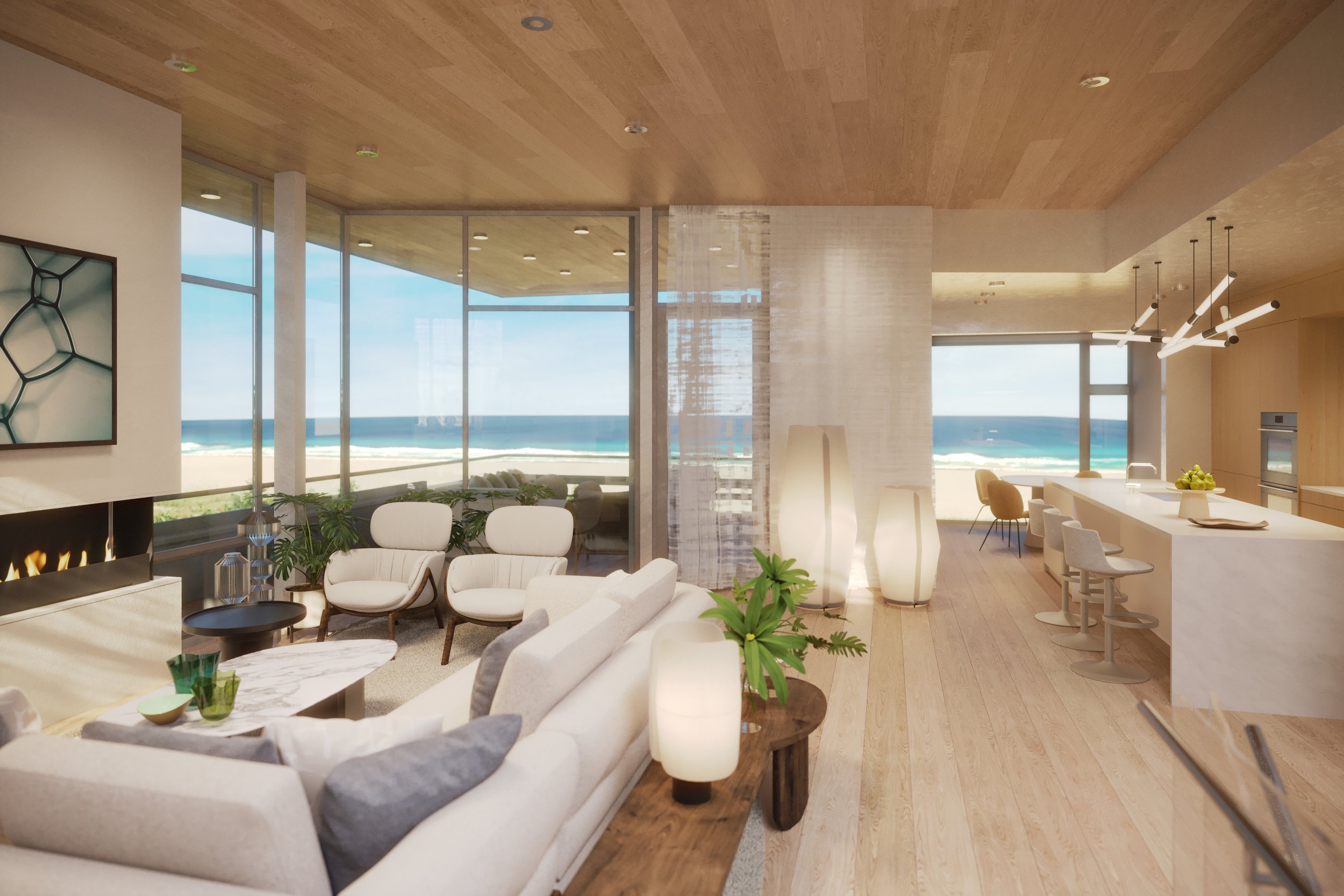
The arrangement of the house is inverted with the living, dining and kitchen areas above maximising unobstructed views to the ocean beyond.
It was very important to minimize sound and vibration transmission between the floors. Acoustical panels behind the headboard make the room less lively from a sound point of view. A silent environment was achieved through integrated sound-absorptive material behind the bed and a membrane under the wood floor to minimise noise and vibration.
By meticulously addressing light, sound, tactile elements, and scent, the bedroom at the Oceanfront Residence became a holistic sensory sanctuary. This demonstrates how biophilic design principles can be effectively applied to create truly restorative sleep environments that engage multiple senses, fostering a deeper connection to nature and promoting profound wellbeing.
Optimising Acoustics in Your Living Space
If you’ve ever wondered how the right acoustic design can transform not just music, but your everyday living experience, this project is a perfect example. From period features to bespoke treatments, we show how thoughtful sound design can elevate both comfort and style.
Contact us today to explore acoustic solutions tailored to your space, where performance, wellbeing, and aesthetics come together seamlessly.