
Our Material connection with nature and wellbeing: Using materials for the most positive experience in an interior space
Article originally published in the Journal of Biophilic Design - Material Issue, January 2026
We know from our own work as well as from examples of projects around the world that a building’s materials can make a significant difference to mental and physical health. This can be in terms of how occupants are able to enjoy natural light, a visual connection with the landscape, or have contact with the patterns, touch, scent and sound from the natural world. There is a wealth of data on the benefits such as the 10-15% increased mental function and memory recall when there is access to a view.
Symbiotic Living looks at materials in a multi-faceted way and as an important part of the biophilic design framework for an interior. When thinking about the visual features for an active space we incorporate materials that are bold in colour and shape and with lots of contrast. For a restorative space, the choice is for more muted patterns and colours.
Acoustical qualities are also important. According to statistics from Terrapin Bright Green’s 14 patterns of Biophilic Design, short-term memory increases by 93% in a quiet environment. Materials can dampen sound to create a quiet space. Also important are the tactile qualities which can be hard and cold or soft and warm to the touch. In a restorative space we incorporate textures and materials that feel like they are giving you a hug. Materials can also impact the human experience of a building, preserving culture by incorporating materials and palettes that are rooted in the place.
Studies have also shown that connecting with nature via our olfactory system is another way to impact our experience in a room. With this in mind Symbiotic has incorporated cedar wood in bedrooms for calming properties.
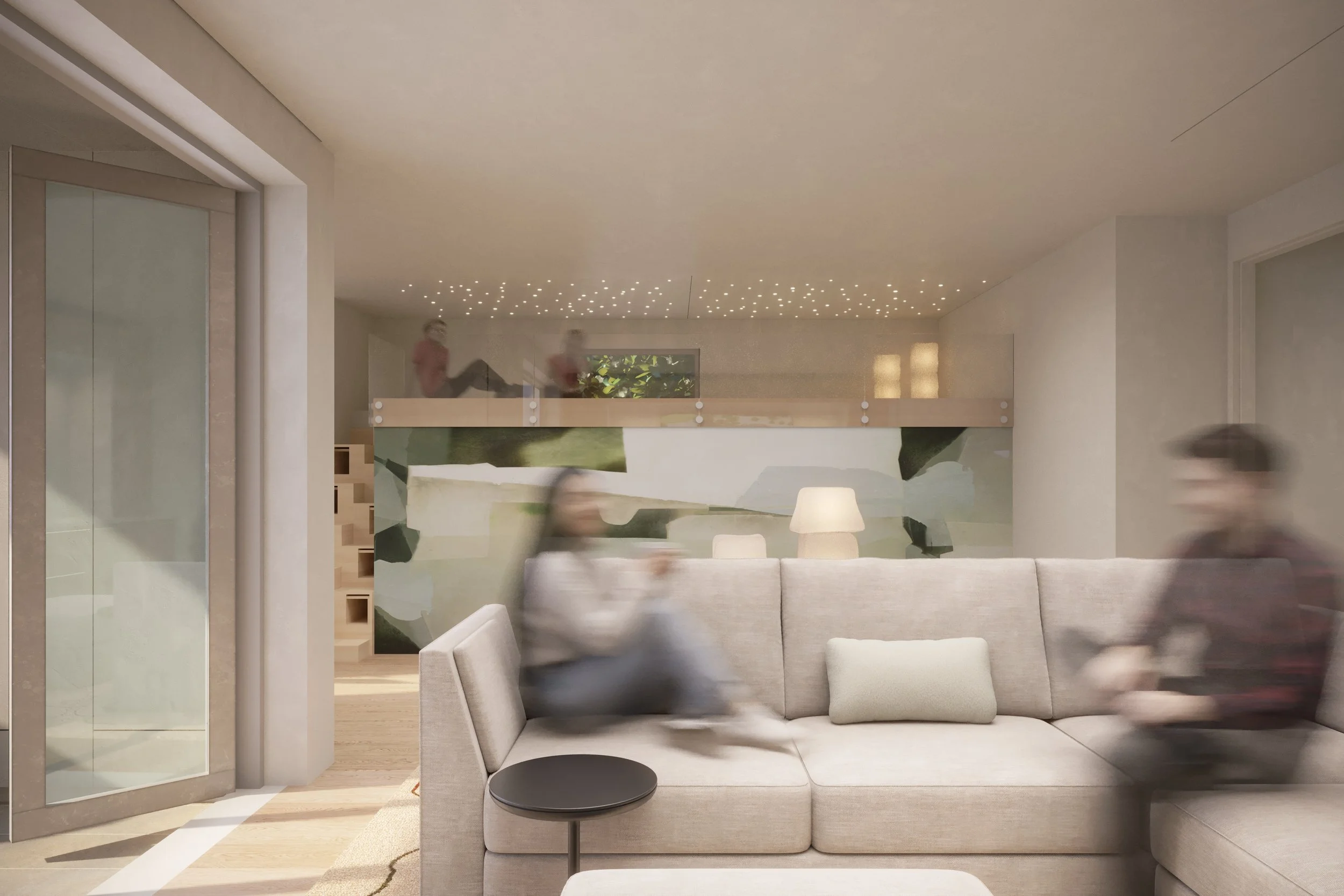
Oceanfront Residence Media Room
Three case studies by Symbiotic Living with biophilic strategies with material
In the Oceanfront Residence on the USA East Coast, the interior works as an extension of the architecture and the materials are integral to this. In 2014, Terrapin Bright Green classified fractals under the biophilic design pattern ‘Complexity and Order’, setting out the idea that “rich sensory information that adheres to a spatial hierarchy similar to those encountered in nature” supports stress recovery, enhanced creativity, relaxation and excitement. Fractals can go beyond a single pattern to help to determine the form, light, sound, and even spatial arrangements. The furnishings, flooring, lighting and other elements impacting the senses change when progressing from the ground floor to the upper floor. At the same time the organisation of the living spaces here as well as the use of patterns in different scales provide cohesiveness and a sense of belonging.
The media room on the ground floor has a children’s loft with a mural which helped to anchor the room behind the seating area. Like a bunker, it’s a protective space, referencing the natural sand dunes adjacent to the house.

Residence for Two Collectors
For the Residence for Two Collectors, materials make homage to the owners and the things they love. The aim was to design a home that would deepen the connection they had with things that are part of their personal stories. Starting with a raw space, we curated their collection for the residence, thinking of the biophilic design principle about beauty. End Grain walnut references walnut in the owner’s collection in addition to the warmth and tactile qualities.
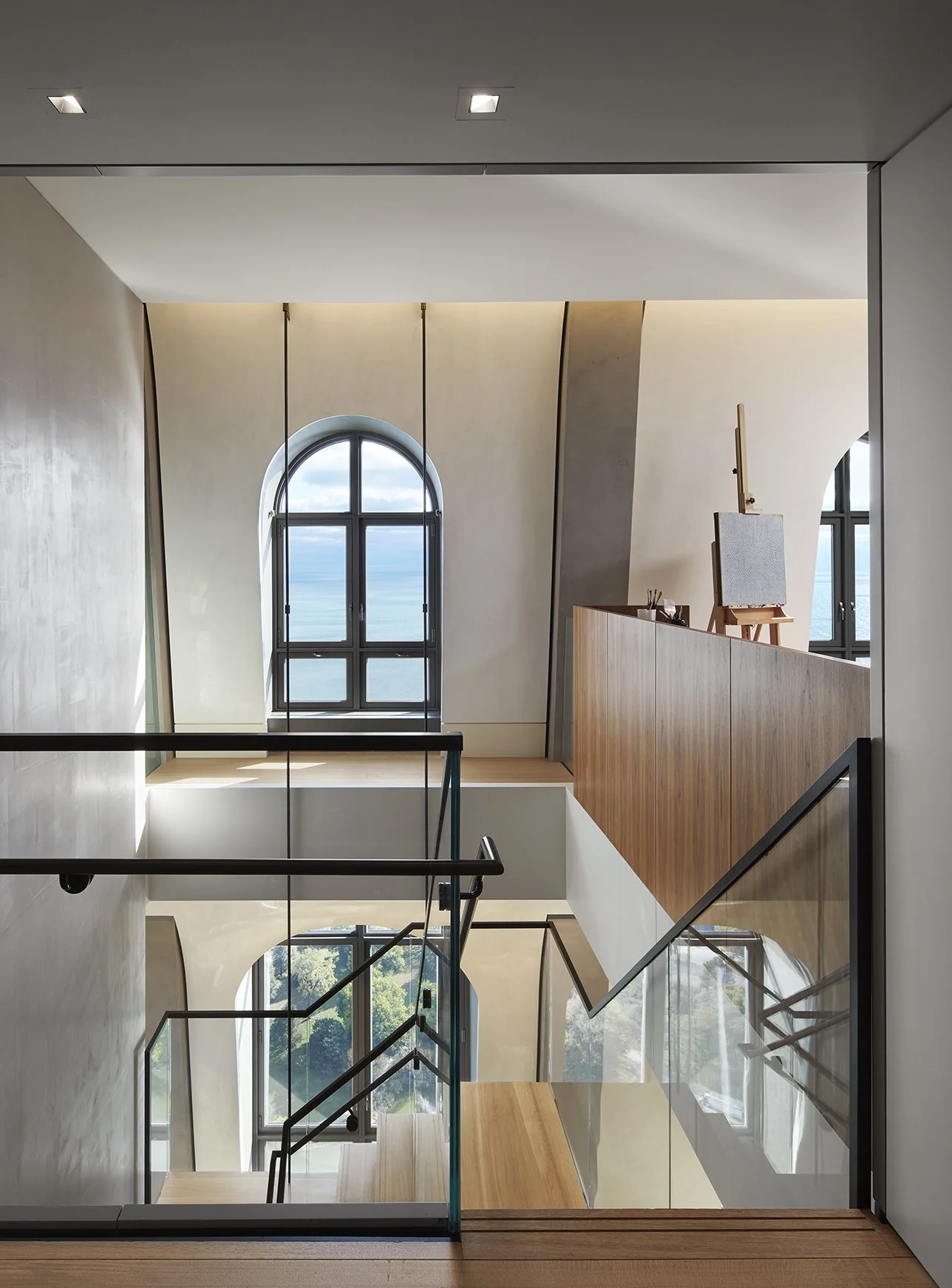
Lakeview Penthouse
A Lakeview Penthouse in Chicago, demonstrates how by changing the tone and quality of light in a space, materials can positively impact wellbeing on a daily basis. The aim was a home that maximised the stunning 270 – degree views while also being a private sanctuary. Layered architectural finishes encase the framework of the residence. The most dramatic factor is the polished Venetian plaster on the penthouse’s perimeter wall where light and materials work together.
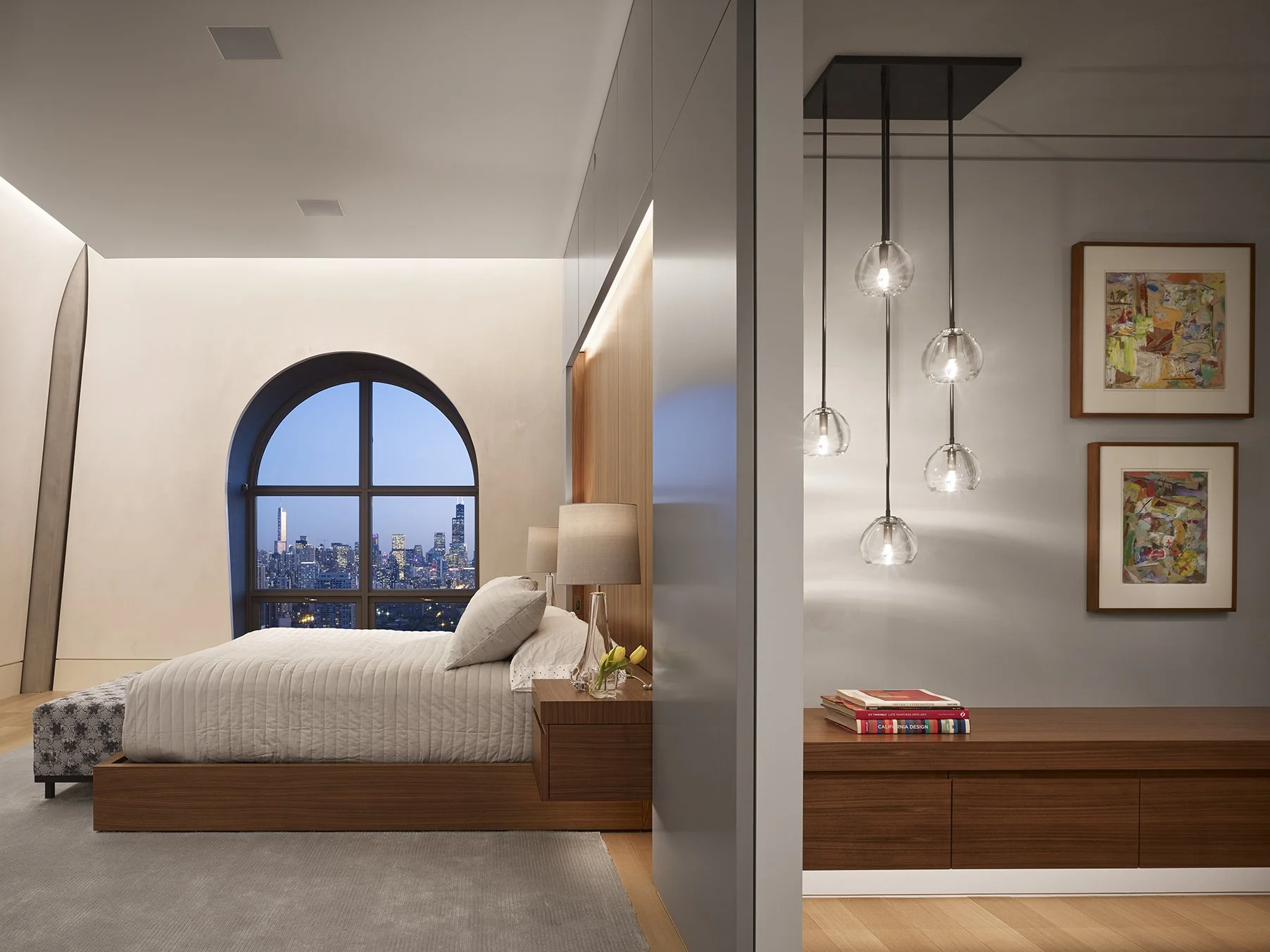
Lakeview Penthouse
The lighting on the venetian plaster wall in the Lakeview Penthouse progresses from day to night, reinforcing the 24 hour cycle of the day. It’s brighter and bluer at midday and dimmer and warmer as evening approaches. The body’s response to this positively impacts the Circadian system. According to Terrapin Bright Green, a higher content of blue light, similar to skylight, produces serotonin and an absence of blue light which occurs at night produces melatonin. Kandel and others have published how the balance of serotonin and melatonin can be linked to sleep quality, mood, alertness, depression and various health conditions.
Viewed through an ROI lens, human-centred design is a long-term investment. Durable, timeless materials reduce replacement costs, while biophilic strategies that support wellbeing create spaces that remain functional, comfortable, and desirable over time. By designing around people rather than trends, these interiors retain and perform well after completion.
REFERENCES LINKS:
For: 10-15% increased mental function and memory recall when there is access to a view:
Heschong Mahone Group, Inc. - Daylighting and Productivity. "Heschong Mahone Group, Inc. - Daylighting And Productivity." H-m-g.com. N. p., 2017. Web. 20 Dec. 2017
For: short-term memory increases by 93% in a quiet environment:
Banbury, Simon, and Dianne C. Berry. "Disruption of office‐related tasks by speech and office noise." British journal of psychology 89.3 (1998): 499-517.