
Biophilic principles guiding interior design: How Symbiotic Living elevated wellbeing in two residential projects
Article originally published in the Journal of Biophilic Design - Interior Design Issue, November 2025
As wellness real estate becomes the fastest growing sector within the $6.8 trillion global wellness economy and home buyers in both the US and UK are willing to pay more for restorative and natural design features, we are seeing an increasing number of home interiors with nature-inspired design in practice. Biophilic design is at the heart of projects by Symbiotic Living, based in the UK and the US.
One of Symbiotic Living’s projects is a new contemporary oceanfront residence on the east coast of the US. The owners, living hectic lives in the sandwich generation, wanted a home that would be a sanctuary of calm while also supporting visiting ageing parents and working well for gatherings. This was to be their ‘forever home’. Symbiotic Living’s solution was to create a home that would not only look beautiful but actively support wellbeing through biophilic design principles.
The house looks out towards the Atlantic Ocean from an area protected by natural dunes. The architects, HEDS, designed the property with the site palpable. Organised as a tree house, the living, dining and kitchen areas are at the top and the bedrooms and quieter rooms are below. Progressing from the ground floor upwards, from the private to the gathering/shared spaces, there is the feeling of being grounded and then experiencing the house opening up to the views.
Symbiotic Living collaborated with HEDS to design the interior to reinforce the overall spatial experience of the architecture and to foster a continuity between exterior and interior spaces. The aim was to promote calm and restoration and create a sensory connection to the beautiful oceanfront setting. A key aspect of the design is the progression from the ground floor to the upper floor as expressed through choices of materials, lighting, sound and even scent.
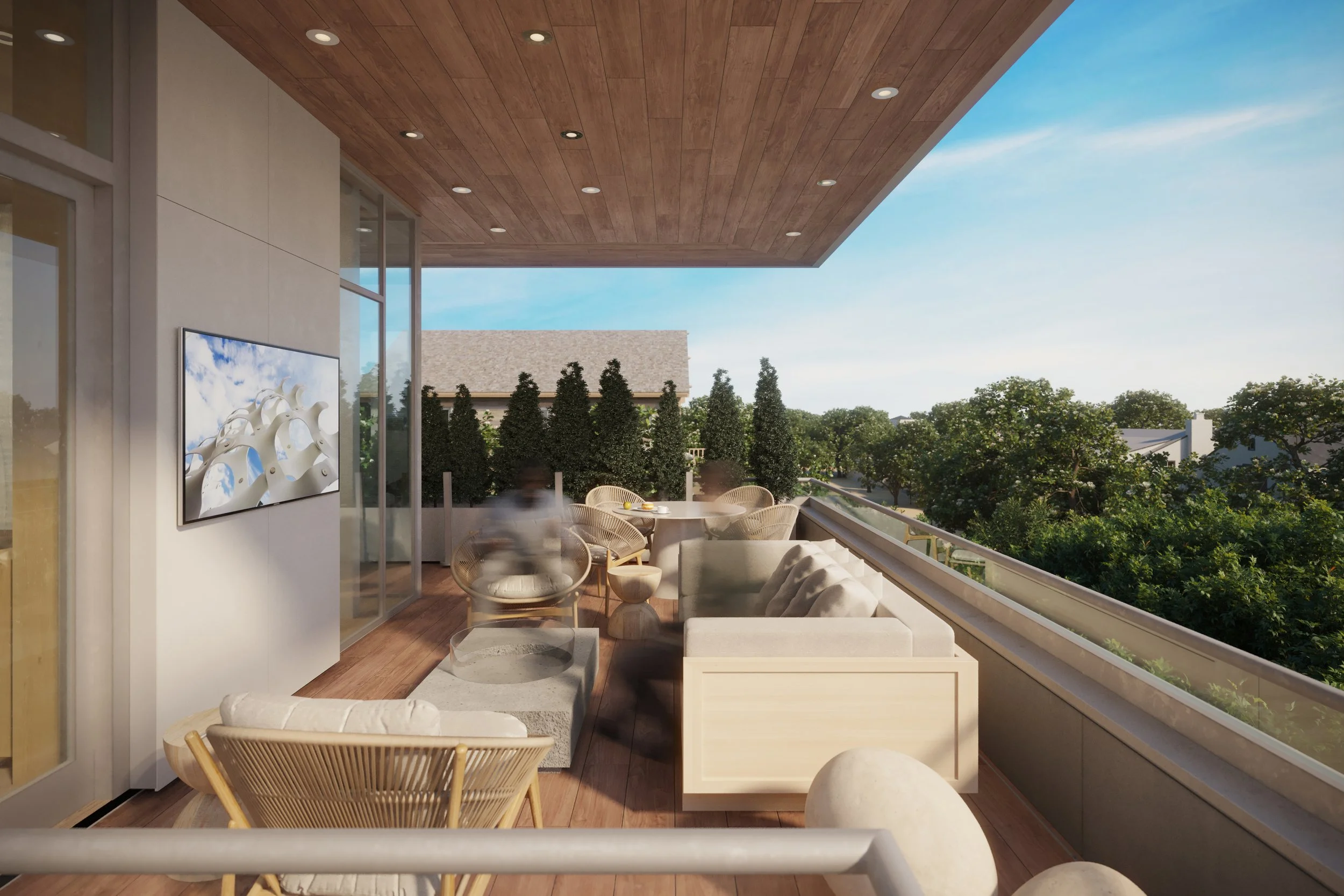
A landscape screen provides privacy from the house to the west
We can feel the most calm and secure in our home when we achieve the right balance of prospect (openness and views) and refuge (security and enclosure). The architecture presented prospect with the expansive views of the ocean and refuge with a big overhang and living spaces set back. Symbiotic Living’s design strategy enables the living spaces to have unobstructed views while providing privacy from the adjacent public beach access and neighbouring houses. The patio outside of the dining room has a landscape screen to provide privacy from the house to the west. The living room furniture was conceived as though it had grown from the landscape itself, forming a raised perch with a privacy screen from which to enjoy the scenery. Bouy-inspired lamps, 3D printed from bioplastic double function as screen and lamps that glow. Drapery that mimics dappled sunlight through the trees facilitates both light and privacy.
The concept of Active Changing Light to enable a healthy circadian rhythm underpins the implementation of a natural light progression throughout the home. The interior sculptures on the stair well provide changing shadows throughout the day. The headboard in the primary bedroom has lighting mimicking the cycle of the day.

Interior sculptures on the stair well provide changing shadows throughout the day
The Howe Street Residence was to be a place of solace for owners with stressful lives. The scale of the house felt cold and vacuous when they moved in. Symbiotic Living’s goal was to transform the urban property into a warm and restorative environment. The main strategies were to introduce biomorphic forms and patterns, to work with fractals and to support the local community by working with small independent makers and suppliers.
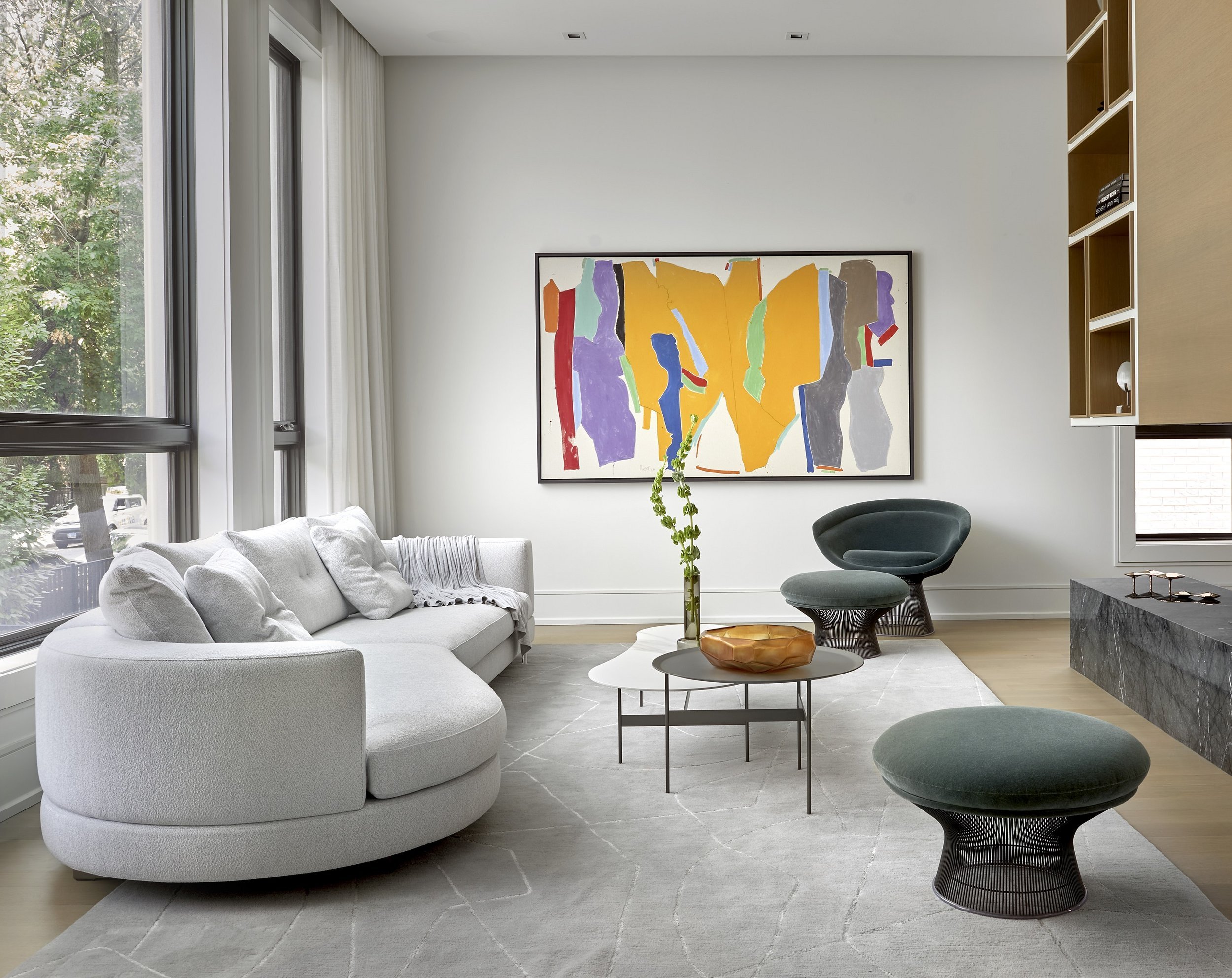
Materials and organic shapes and patterns provide cohesion
Studies and evidence-backed theories in environmental psychology show the benefits of using fractals – the patterns, scale and geometries found in nature –when applied to an interior. These include Terrapin’s classification of the sensory information of fractals under the biophilic design pattern ‘Complexity and Order’ and Kellert & Calabrese’s recommendations on using fractals to make spaces nourishing and restorative.
Symbiotic Living introduced organic shapes in different scales 2-dimensionally in the living room and dining room rugs, and 3-dimensionally at the dining table as interlocking shapes at the table base. Two custom benches, by the stairs and in family room, play with pleated texture at different scales. Materials and organic shapes and patterns provide cohesion including the sofa with a teardrop shape and the artwork the Jack Roth “Dancers”.

Organic interlocking shapes form the table base
The positive impact from connecting with nature and integrating multi-sensory experiences of nature into these two very different interiors will be to provide the occupants with homes that will boost their physical, cognitive and emotional health for the future.